Buying off-plan on the Costa Blanca: checking the real views
A practical checklist to find out what you will really see from your terrace before you sign: orientation, height, neighbours and what may be built.
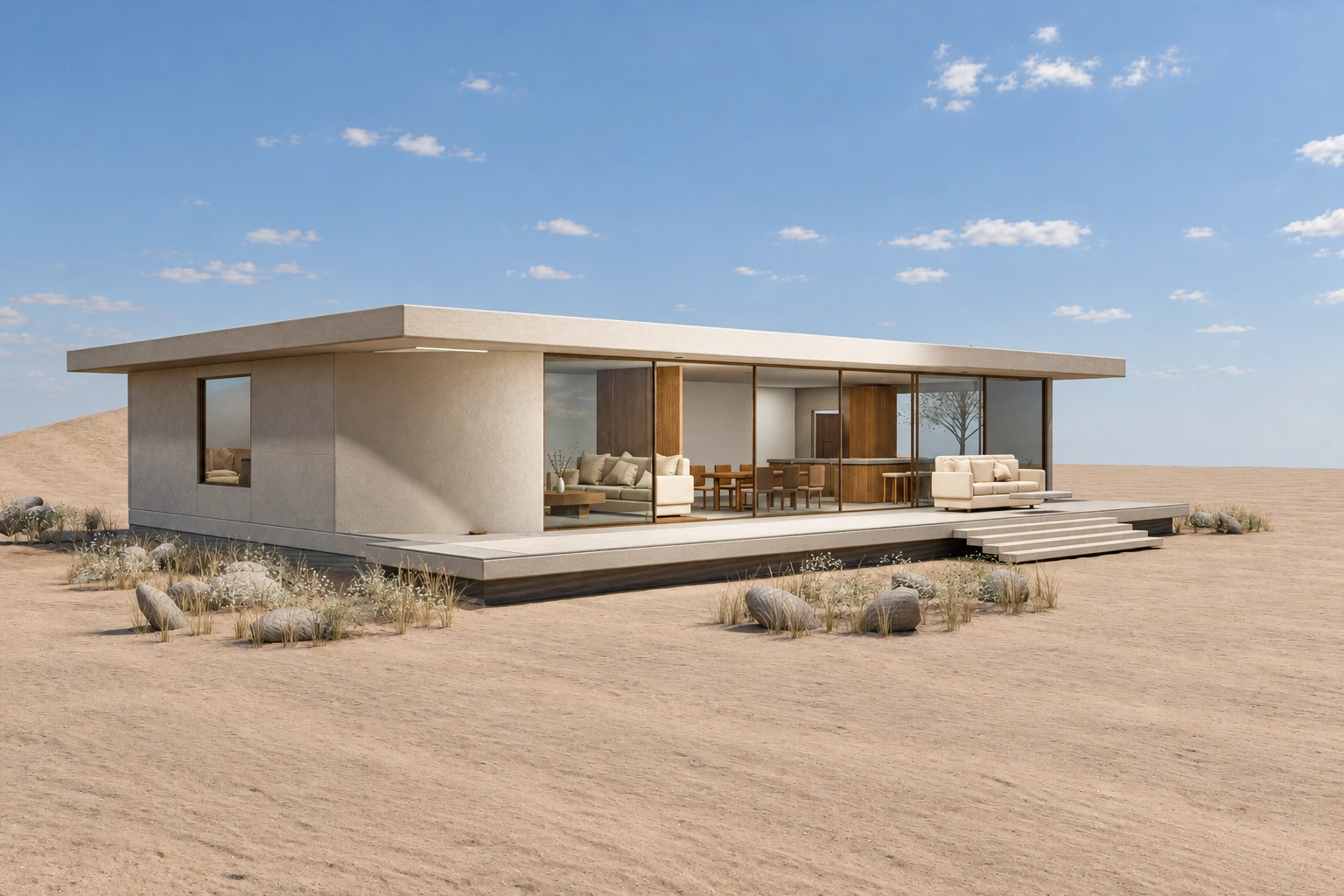
On the Costa Blanca, many new homes are sold before the first stone is laid. In Alicante province, foreign buyers accounted for around 43% of all home sales in 2025, and many of them decide from home, hundreds of kilometres away.
The view is often the reason to buy. It is also the thing that is hardest to judge from a brochure. A generic render of “the development at sunset” says little about what you will see from your terrace, on your floor. This checklist helps you ask the right questions.
1. Ask for the view from your home, not from the development
Most marketing images show the best side of the building. Ask the developer or the agency for the view from the specific home you are considering: its floor, its orientation and its terrace. If they only have a generic image, ask whether it was produced from the real surroundings or from a stock background.
2. Check the orientation and the sun
A south-facing terrace gets sun most of the day; east gets the morning, west the afternoon and the sunset. On the coast, orientation also decides whether you look at the sea, at the mountains or at the building next door. Find the plot on a map, check where north is and compare it with the floor plan.
3. Floor height changes everything
The same layout can have open views on the fifth floor and a wall on the first. Trees, walls and neighbouring buildings block the view up to a certain height. If the development has several floors, compare homes on different levels before deciding.
4. Look at what is around the plot today…
You can explore the surroundings without travelling:
- The Spanish Land Registry viewer (Sede Electrónica del Catastro) shows plots and existing buildings.
- Aerial photography from the Spanish National Geographic Institute (Iberpix) or Google Earth shows the terrain, vegetation and neighbouring buildings.
- Street-level imagery helps you understand the access road and the immediate neighbours.
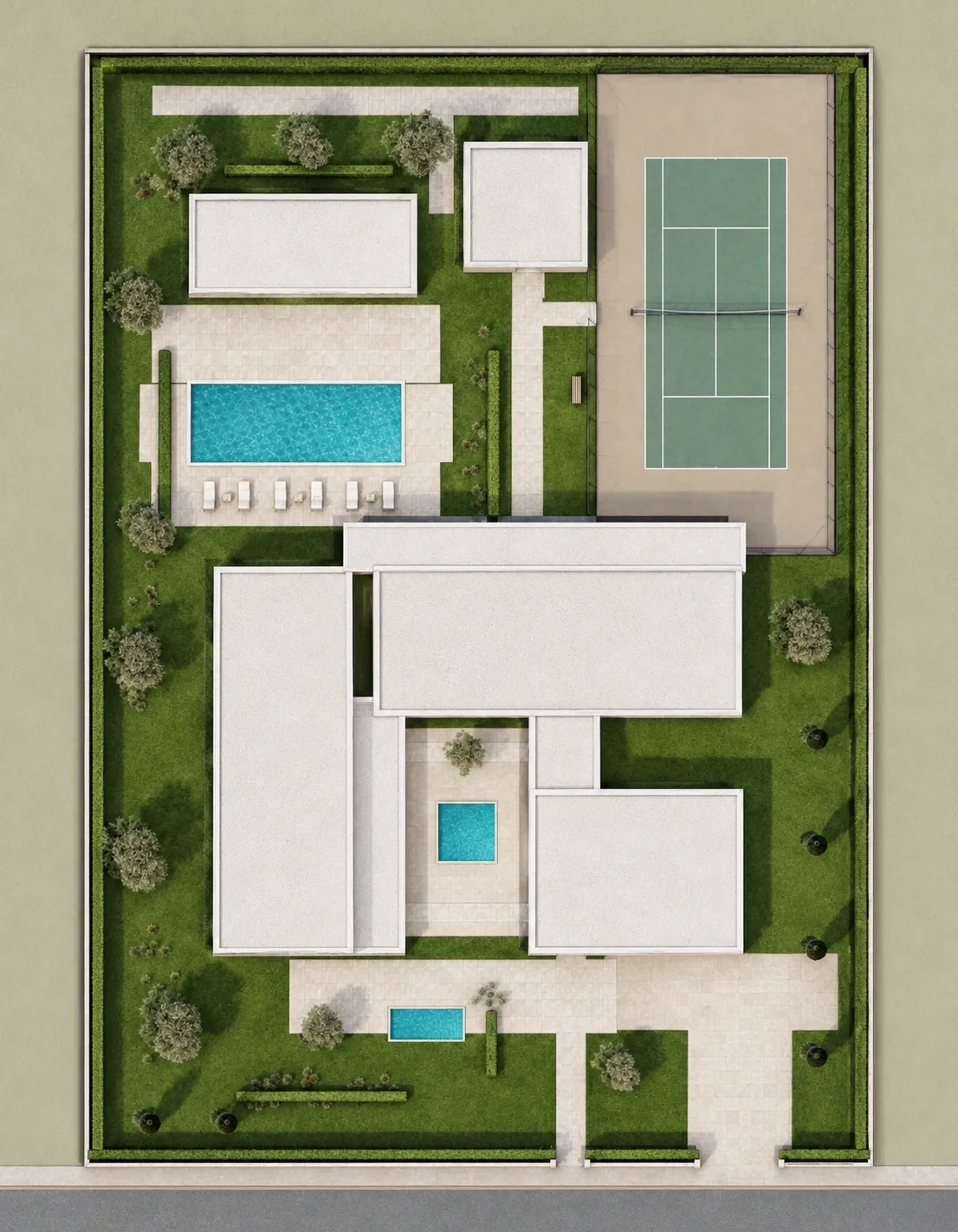 Seeing the plot from above helps you understand orientation, access and distances to the boundaries. Villa Umbral, a studio project.
5. …and at what may be built tomorrow
An empty plot in front of the development may not stay empty. Ask the developer whether the land in front is buildable and how high it can be built, and check the local planning documents with the town hall or your lawyer. This is one of the most important questions, and one of the least asked.
6. Real distances, not straight lines
“Five minutes from the beach” may be measured in a straight line. Check the actual walking or driving route to the beach, the shops, the golf course or the airport.
7. Ask what is binding
Images of off-plan homes are usually marked as non-binding. Ask your lawyer which documents describe what you are buying (plans, specifications, surfaces) and keep a copy of the views and images you were shown when you made your decision.
How we approach it
At Nuvu we model each development within its real surroundings: the plot, the terrain and the neighbouring buildings, using public mapping data. That way the view from each home is calculated from its real position, not painted onto a background. If you are a developer and want your buyers to see exactly that, tell us about your project.